Wednesday, February 1, 2012

Monday, January 9, 2012
An un-extinction event in the Galapagos
When the word of new extinctions has become all too common, it's good to hear about when a species thought to be extinct is found to be alive.

Well, at least the DNA says they're out there somewhere on Isabela Island.
And if they don't find the pure-breds, at least the newly identified hybrids can be used in a breeding program to bring back the Floreana Galapagos tortoise into existence and reintroduced into its native island, where it has not existed for 162 years.
Interesting how if this turns out to be true, it means that at some point the Floreana tortoise was an accidentally introduced invasive species on Isabela (and perhaps still is). In this case, turns out this may have been the salvation of the species!
'Extinct' Galapagos tortoise may still exist - BBC News
Well, at least the DNA says they're out there somewhere on Isabela Island.
And if they don't find the pure-breds, at least the newly identified hybrids can be used in a breeding program to bring back the Floreana Galapagos tortoise into existence and reintroduced into its native island, where it has not existed for 162 years.
Interesting how if this turns out to be true, it means that at some point the Floreana tortoise was an accidentally introduced invasive species on Isabela (and perhaps still is). In this case, turns out this may have been the salvation of the species!
Sunday, January 1, 2012
End of the Month Science Music Video: Björk - Hollow
This video, for a song Björk released only though a smartphone app called Biophilia, makes beautiful use of molecular modeling and animation.
Biomedical animator Drew Berry made the animation using models of DNA and DNA-binding and -replicating proteins.
Also make a visit to Björk's webpage to listen to her inspired message on music and nature.
Thank you Marcos for letting me know about this one!
Biomedical animator Drew Berry made the animation using models of DNA and DNA-binding and -replicating proteins.
Also make a visit to Björk's webpage to listen to her inspired message on music and nature.
Thank you Marcos for letting me know about this one!
Thursday, December 29, 2011
Aquarium fish and aggression
An article in the New York Times relates new findings on aquarium fish behavior. Turns out they are much more aggressive than their counterparts in the wild:
http://www.nytimes.com/2011/12/27/science/fish-in-small-tanks-are-shown-to-be-much-more-aggressive.html?ref=science
 It makes lots of sense when you think about how fish in the wild have a whole pond, lake, river or ocean to swim around in. Should they encounter an aggressive conspecific or hostile other species, there's plenty of room to swim away. Not so in the confined space of a small aquarium.
One thing the article does not address is differences between species in their responses to aquarium overcrowding. Solitary species must surely get more aggressive than social fish who thrive in schools.
My brothers and I kept freshwater aquarium fish for many years, and we did lots of research on what kinds of fish to get, making sure we get species that like the same water and temperature conditions, and were social and non-aggressive. Many of the fish we used to keep were smalls ones that were happiest in schools, like South American tetra species, or Asian species like the zebrafish and the cherry barb. The optimum size of the school for a given fish tank volume must differ between species.
The fish used in the study, the Midas cichlid, is by nature territorial and aggressive, so the effects of living with other fish in a small fish tank on aggression must be more acute in this species that in others. Still, the study is important in helping us be aware of the silent stress that fish may endure in aquarium tanks. Maybe it will point us to what species are suitable to aquarium life and which are not, what the optimum tank sizes for different fish species are, and in what numbers of fish to keep them in a given volume of tank.
http://www.nytimes.com/2011/12/27/science/fish-in-small-tanks-are-shown-to-be-much-more-aggressive.html?ref=science

One thing the article does not address is differences between species in their responses to aquarium overcrowding. Solitary species must surely get more aggressive than social fish who thrive in schools.
My brothers and I kept freshwater aquarium fish for many years, and we did lots of research on what kinds of fish to get, making sure we get species that like the same water and temperature conditions, and were social and non-aggressive. Many of the fish we used to keep were smalls ones that were happiest in schools, like South American tetra species, or Asian species like the zebrafish and the cherry barb. The optimum size of the school for a given fish tank volume must differ between species.
The fish used in the study, the Midas cichlid, is by nature territorial and aggressive, so the effects of living with other fish in a small fish tank on aggression must be more acute in this species that in others. Still, the study is important in helping us be aware of the silent stress that fish may endure in aquarium tanks. Maybe it will point us to what species are suitable to aquarium life and which are not, what the optimum tank sizes for different fish species are, and in what numbers of fish to keep them in a given volume of tank.
Wednesday, November 30, 2011
End of the Month Science Music Video: They Might Be Giants (Photosynthesis)
They Might Be Giants - Photosynthesis
Friday, November 18, 2011
Can the internet help save one of the most biodiverse spots on Earth?
Last summer I had the great privilege of visiting what scientists have identified as possibly the most biodiverse spot on Earth (one hectate of this place contains more tree species than are native to all of North America). It is also home to some of the numerous indigenous cultures that still lead a traditional existence. The forest is Yasuní, in Ecuador, where I was born. None of my relatives in Ecuador have been there, so it was a special privilege to tell them about this national treasure while lies in the tropical east of the country.
Because it sits on large oil reserves, the forest could easily succumb to the pressures of an oil-addicted world, plus the needs of a developing nation. In addition to the toxic pollution of oil extraction wold come the colonization, deforestation, illegal logging, and unsustainable hunting that comes with the oil-access roads.
But the forward thinking government of Ecuador made a bold proposal to save the park from this threat. In 2007, the government of President Rafael Correa proposed to keep the oil under Yasuní permanently under ground in order to protect the park, fight global warming and preserve the lands of the indigenous populations there. In exchange, the government would receive several billion dollars from developed countries.
So far, donations from governments have not been forthcoming. At a screening for Yasuní, Two seconds of life, a documentary about the forest by a team from Ecuador, Austria and the US, which premiered in the US in the Ecuadorian Embassy in Washington, DC, I heard talk that instead of governments, perhaps the private sector might be a better source of donations.
Perhaps. But I also wondered if maybe small private donations might also help. So recently I went to the Yasuní-ITT Trust Fund, a fund administered by the United Nations that will take donations and help pay for this innovative preservation initiative. I saw that one could make personal donations, and so I made one. I was happy to see that I was not alone.
As you can see above, there were personal donations from individuals in developed countries, especially the US and the UK. But there were even donations from people in poor countries, including Ecuador. Maybe with some better marketing and some savvy use of the internet, the world could be crowd-sourced for funds to help save this jewel among forests!
But another source of hope lies not outside of the park, but within, with the people who live there. When I visited the forest, I stayed at the Napo Wildlife Center, an eco-lodge run by an the indigenous Kichwa community of Añangu, within the park boundaries. I spoke to one of the older guides from the tribe, who told me that before they started the eco-lodge, his people, who are a river people who depend completely on the forest for food and medicine, faced the threat of outsiders deforesting and hunting, with the government doing nothing to prevent it. They took matters in their own hands, developing with the help of outside NGOs a wildlife center and eco-lodge, which now serves as a home-grown and sustainable alternative to oil-development. Other parts of Ecuador may benefit from this model, including the unique and endangered cloud forests on the Western slopes of the Ecuadorean Andes, which were recently featured in the New York Times.
I didn't take many photos during my trip; I relied on my travel companions to do that. But here are a few of the photos I did manage to take. Nothing like experiencing it with your own senses though.

If you'd like to see some better photos, check out photos on Flickr tagged "Yasuni".
You can also check out a photo slideshow of Yasuní from Science magazine.
And please consider donating to the Yasuní-ITT Trust Fund! Show Ecuador and the world that there is an alternative to destructive and irreversible oil development, and that we care.
 |
| On the lake, by the Napo Wildlife Center, Yasuní National Forest, Ecuador. |
But the forward thinking government of Ecuador made a bold proposal to save the park from this threat. In 2007, the government of President Rafael Correa proposed to keep the oil under Yasuní permanently under ground in order to protect the park, fight global warming and preserve the lands of the indigenous populations there. In exchange, the government would receive several billion dollars from developed countries.
Trailer for Yasuní - Two Seconds of Life, a wonderful documentary about Yasuní Forest, the forces that threaten it, and the plan to save it.
So far, donations from governments have not been forthcoming. At a screening for Yasuní, Two seconds of life, a documentary about the forest by a team from Ecuador, Austria and the US, which premiered in the US in the Ecuadorian Embassy in Washington, DC, I heard talk that instead of governments, perhaps the private sector might be a better source of donations.
Perhaps. But I also wondered if maybe small private donations might also help. So recently I went to the Yasuní-ITT Trust Fund, a fund administered by the United Nations that will take donations and help pay for this innovative preservation initiative. I saw that one could make personal donations, and so I made one. I was happy to see that I was not alone.
 |
| Click on graph for larger view. |
As you can see above, there were personal donations from individuals in developed countries, especially the US and the UK. But there were even donations from people in poor countries, including Ecuador. Maybe with some better marketing and some savvy use of the internet, the world could be crowd-sourced for funds to help save this jewel among forests!
But another source of hope lies not outside of the park, but within, with the people who live there. When I visited the forest, I stayed at the Napo Wildlife Center, an eco-lodge run by an the indigenous Kichwa community of Añangu, within the park boundaries. I spoke to one of the older guides from the tribe, who told me that before they started the eco-lodge, his people, who are a river people who depend completely on the forest for food and medicine, faced the threat of outsiders deforesting and hunting, with the government doing nothing to prevent it. They took matters in their own hands, developing with the help of outside NGOs a wildlife center and eco-lodge, which now serves as a home-grown and sustainable alternative to oil-development. Other parts of Ecuador may benefit from this model, including the unique and endangered cloud forests on the Western slopes of the Ecuadorean Andes, which were recently featured in the New York Times.
I didn't take many photos during my trip; I relied on my travel companions to do that. But here are a few of the photos I did manage to take. Nothing like experiencing it with your own senses though.
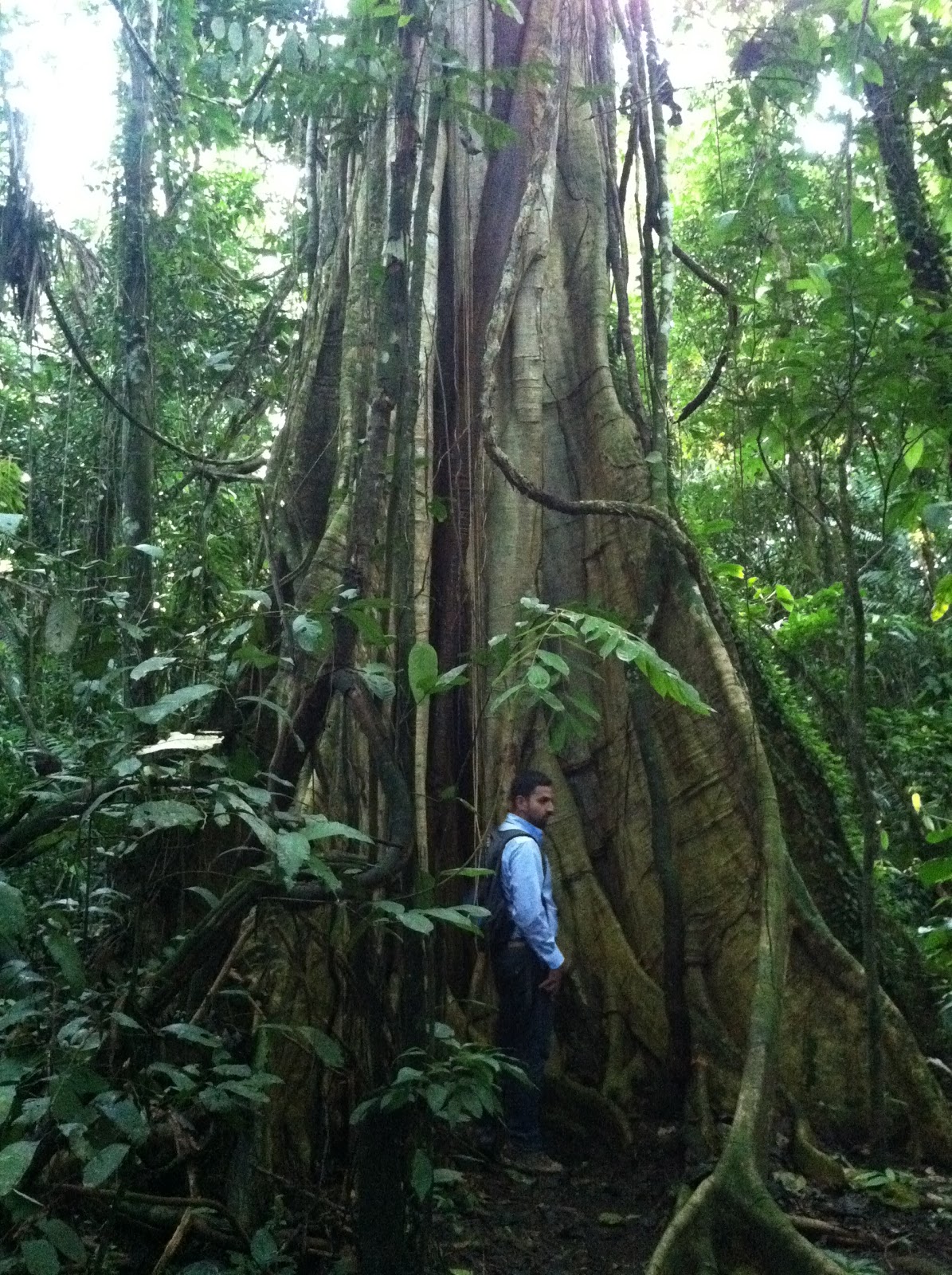 |
| My friend by the base of a tall ceiba tree. |
 |
| Myself at the canopy of a ceiba. |
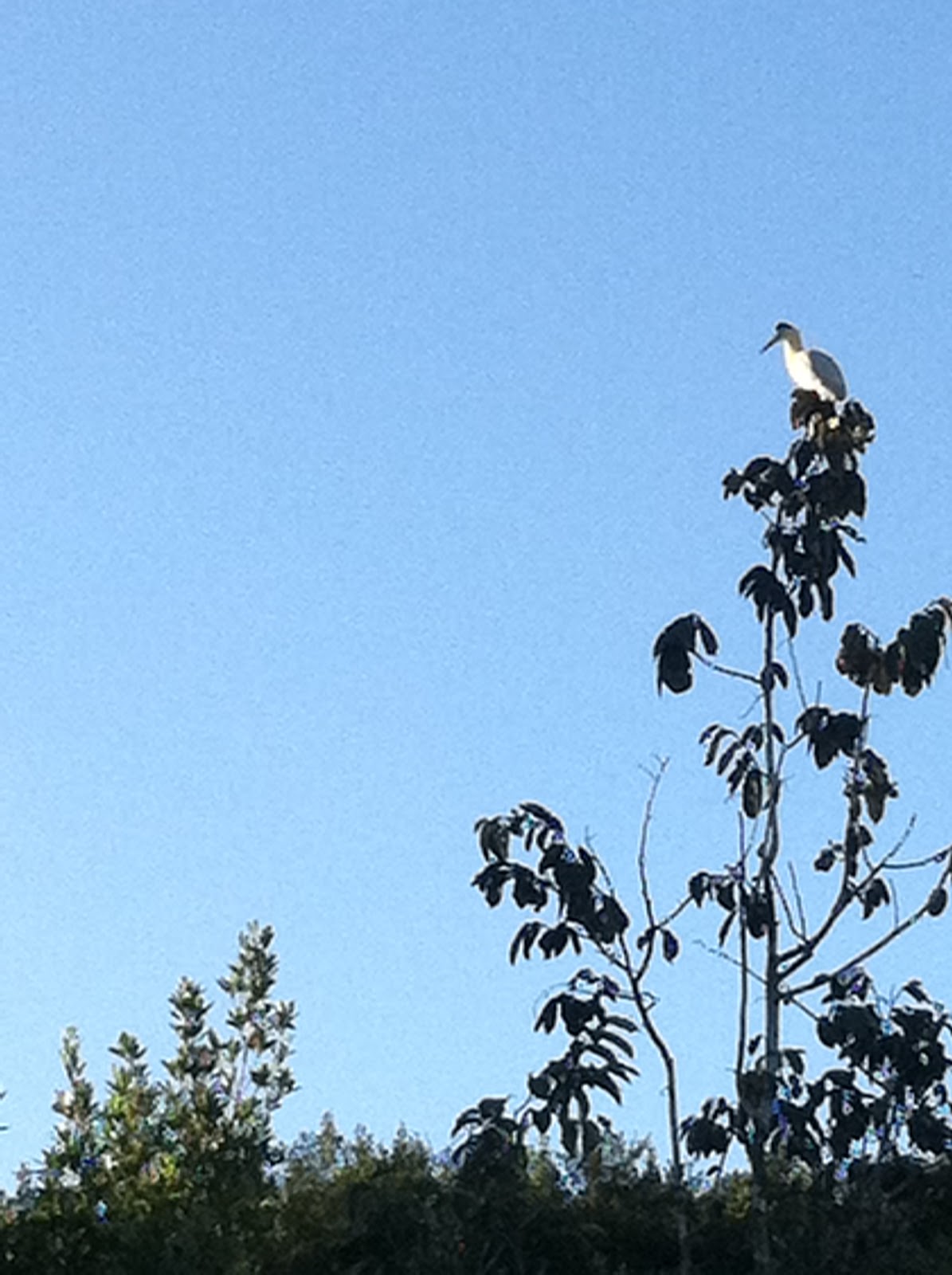 |
| Capped Heron (Piherodius pileatus) |
 |
| A species of Amblypigid, or tailless whip scorpion, an arachnid related to spiders and true scorpion. This one was the size of my hand. |
 |
| Guides from the Napo Wildlife Center. The gentleman on the right is a native of the Kichwa Añangu community. |
You can also check out a photo slideshow of Yasuní from Science magazine.
And please consider donating to the Yasuní-ITT Trust Fund! Show Ecuador and the world that there is an alternative to destructive and irreversible oil development, and that we care.
Monday, October 31, 2011
End of the Month Science Music Video: Guided By Voices (I am a scientist)
Guided By Voices - I am a scientist
Subscribe to:
Posts (Atom)